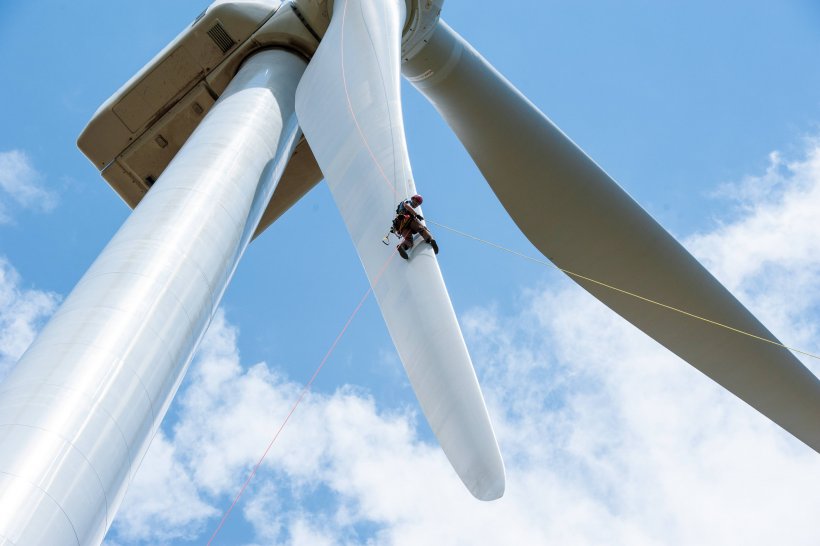
“Wind turbines are soaring to record sizes. The average rotor diameter of turbines installed in 2018 grew to 379 feet, up 141 percent since 1998–1999. | NREL”
Wind energy uses wind to provide mechanical power through wind turbines that turn electric generators to produce power. Wind energy is a popular, sustainable, and renewable energy source. It has a much smaller impact than traditional energy sources such as coal, or natural gas.
Onshore wind is inexpensive and competitive with coal and gas plants. Offshore wind is stronger than onshore wind, however it is very expensive to build and maintain. There are two types of wind turbines: horizontal axis, and vertical axis. Horizontal axis are the most common.
Wind power is an intermittent energy source which means it isn't available on demand. It gives different amounts of power depending on how much wind there is. So wind is mean't to be used with other power sources and not on it's own. Small turbines can produce 100 kilowatts of power which is enough to power a home. A large turbine can produce up to 9.5 megawatts of power.
Once the electricity is generated, it is used, connected to the electrical grid, or stored for future use. According to the U.S. Geological Survey, there are 57,000 wind turbines in the United States. In 2019 wind supplied 1430 TWh of electricity which is 5.3% of worldwide electrical generation. Glocal installed wind capacity is increasing each year.
Wind Turbine Facts: